By Maya Barboa-Ojinaga, Museum Collections Specialist
 Did you know that the Town of Severance has a special connection to Joe Rosenthal’s famous “Flag Raising on Iwo Jima” photograph, taken February 23, 1945? A recent donation of artifacts to the Town of Windsor Museums related to the Severance family has revealed this connection.
David “Dave” Elliot Severance, son of David and Belle Severance, grandson of David Edwin Severance whom the town is named after, was born February 4, 1919, in Milwaukee, Wisconsin. He was adopted by David and Belle, and they soon returned to Greeley. After David Edwin Severance died in 1921, David and Belle took over the Severance family farm and land. Dave and his sisters, Kay and Mabel, would spend time on the family farm in Severance and their home in Greeley throughout their childhood. During his childhood Dave had always aspired to be a pilot in the military but was a little unsure if that would ever become a reality for him.
Fast forward to 1938, after completing one year at the Colorado State Teachers College (present-day University of Northern Colorado) and transferring to the University of Washington for one year, Dave was out of money and needed to decide what he was going to do next. It was then that he decided to enlist in the U.S. Marine Corps. After Dave finished boot camp, he served aboard the USS Lexington for several months. After that, he returned to Greeley for a short break before being assigned to the 8th Marine Regiment in San Diego and Paramarine training in 1941.
After a deployment in Bougainville from November 1943 – January 1944, and a promotion to commander of Easy Company, Dave and his company, along with 70,000 American troops, made their way to the island of Iwo Jima, which is 750 miles south of Tokyo. American troops landed on Iwo Jima on February 19, 1945. Dave and the Easy Company were in the 10th wave of soldiers to land on the island and were quickly met with intense firepower from the Japanese and were 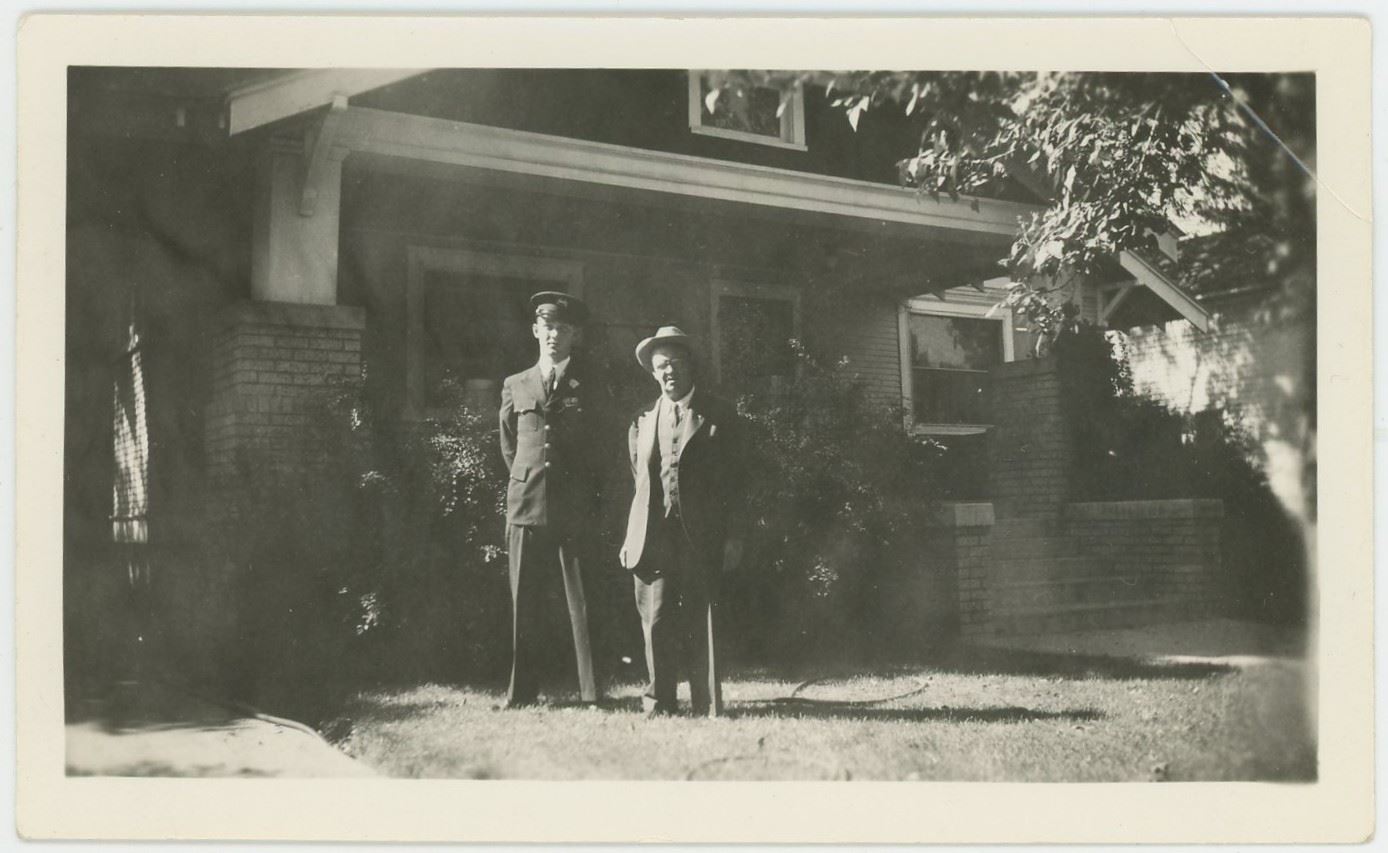 engaged in heavy combat for several days. By February 23, 1945, combat on the island had slowed down and the American troops began to prepare to take control of Mount Suribachi. As directed by one of his commanding officers, Dave sent a group of his Marines up Mount Suribachi to place an American flag at the summit. This was documented as the first flag raising and was photographed by Sgt. Louis Lowery.
In his manuscript, Dave made sure to set the record straight about the events that unfolded next. Once the first flag was raised, Secretary of the Navy, Joe Forrestal, saw the flag waving from where he was on the beach below. Forrestal then requested that flag as a memento and for it to be brought back down. While this was going on, back on the beach, Dave was ordered by one of his commanding officers to send a group of his men to string combat 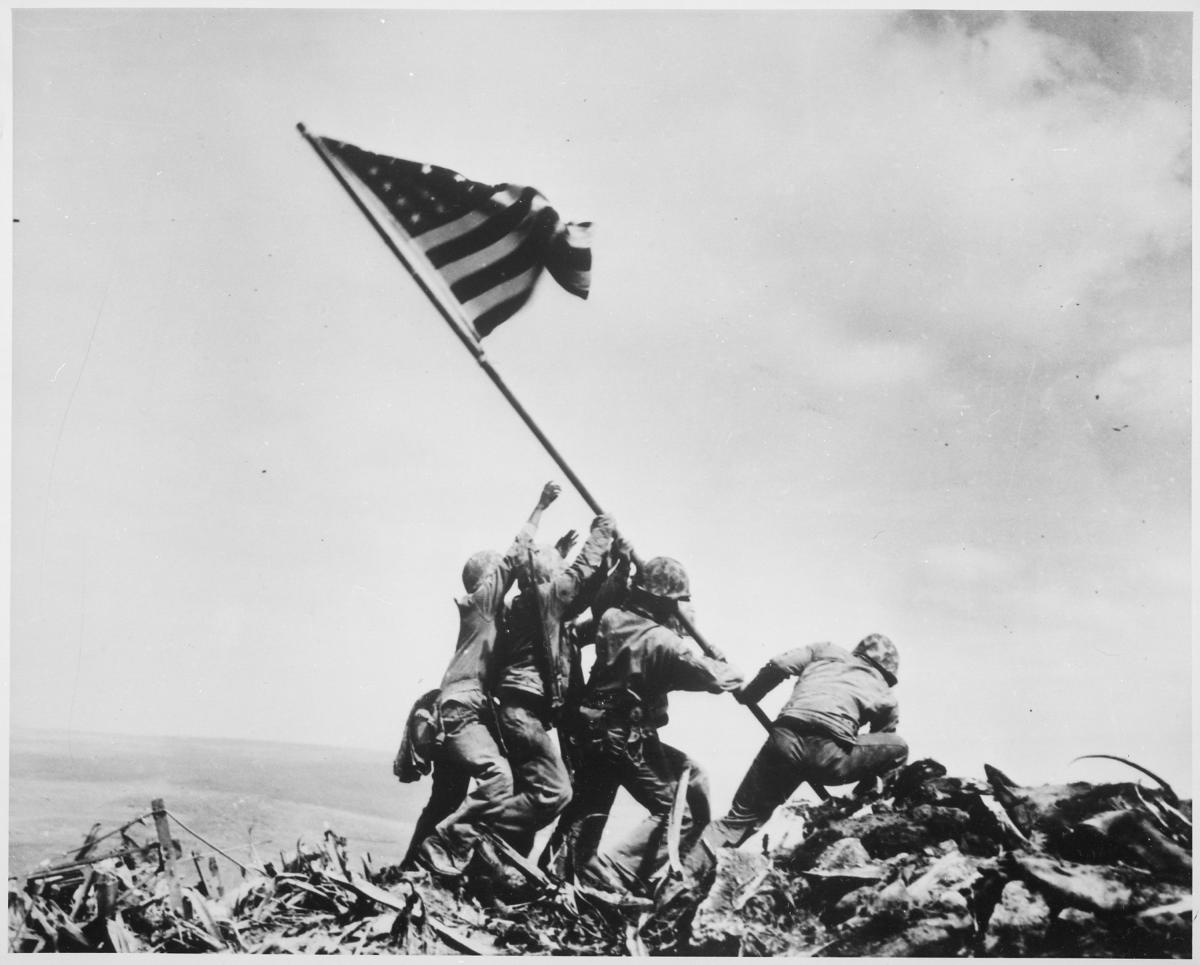 telephone wire to the top of Mount Suribachi, of which Dave chose Michael Strank, Harlon Block, Ira Hayes, and Frank Sousley to complete this task. Also about to go to the summit with replacement radio batteries was Rene Gagnon, a runner in Dave’s company. Just before this crew headed up, the commanding officer came back with a second, larger American flag to be raised, and handed it to Gagnon. He then told Gagnon to tell Strank that when they reached the top, the first flag was to be taken down, and the second flag was to be raised. Under Dave’s instruction, with telephone wire and the second flag, the group made their way to the top of Mount Suribachi. Following this group of Marines were Associated Press photographer Joe Rosenthal and two other photographers, initially unaware that the Marines they were following were carrying the second flag with them. Once they made it to the summit, six Marines – Ira Hayes, Harold Schultz, Michael Strank, Franklin Sousley, Harold Keller, and Harlon Block – began to raise the second flag. Seeing it happen out of the corner of his eye, Rosenthal quickly snapped the photograph, not realizing he had just taken one of the most powerful photographs in American history. Though the flag raising provided promise for American troops, intense combat continued on Iwo Jima until March 26, 1945, when the island was finally secured.
After World War II, Dave continued his career with the Marines and became a pilot, flying fighter aircraft during the Korean War. During his career  with the Marines, Dave served in World War II, the Korean War, and the Vietnam War. He retired from the Marines in 1968.
During his retirement, he organized a reunion with Easy Company and provided interviews for James Bradley while he wrote the book Flags of Our Fathers (2000). Bradley’s father was corpsman John Bradley who witnessed the second flag raising on Iwo Jima. The book was then made into a movie in 2006, directed by Clint Eastwood, where Dave served as a historical consultant. He was portrayed in film by actor Neal McDonough.
Dave died on August 2, 2021, when he was 102 years old. He is buried at Miramar National Cemetery in San Diego, CA. Though Dave didn’t return to his hometowns of Greeley and Severance, he continued his family’s legacy on the local and national scale.
Image 1: Dave and his father, David, outside their home in Greeley, circa 1938.
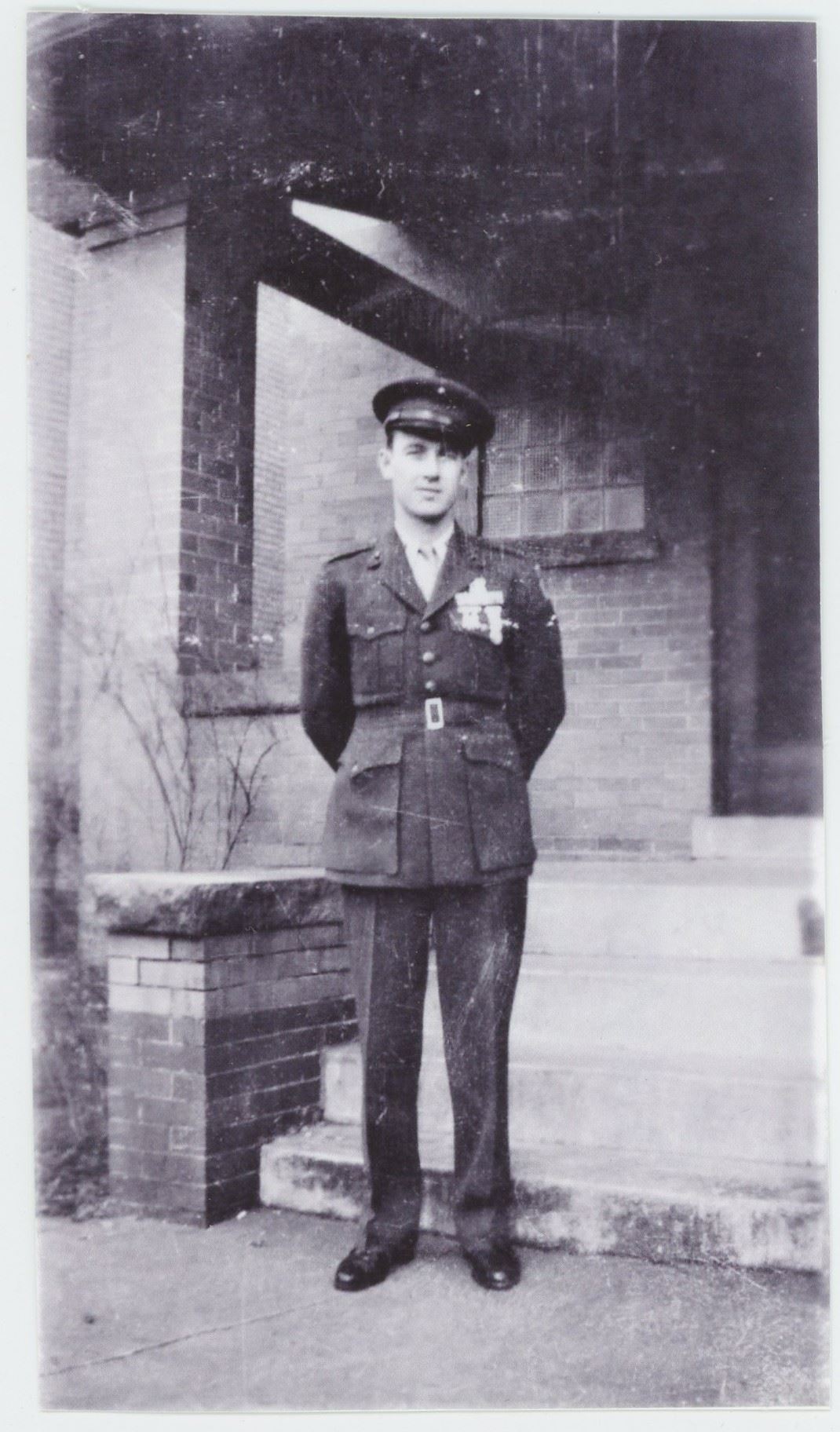
Image 2: Dave outside the family home in Greeley, circa 1945.
Image 3: “Flag Raising on Iwo Jima,” February 23, 1945, taken by Joe Rosenthal, from the National Archives Catalog.
Image 4: The cover of Dave's manuscript, "My Life as I Remember It."